Blog
Physical AI Is Becoming Turnkey. India Should Build It Now.
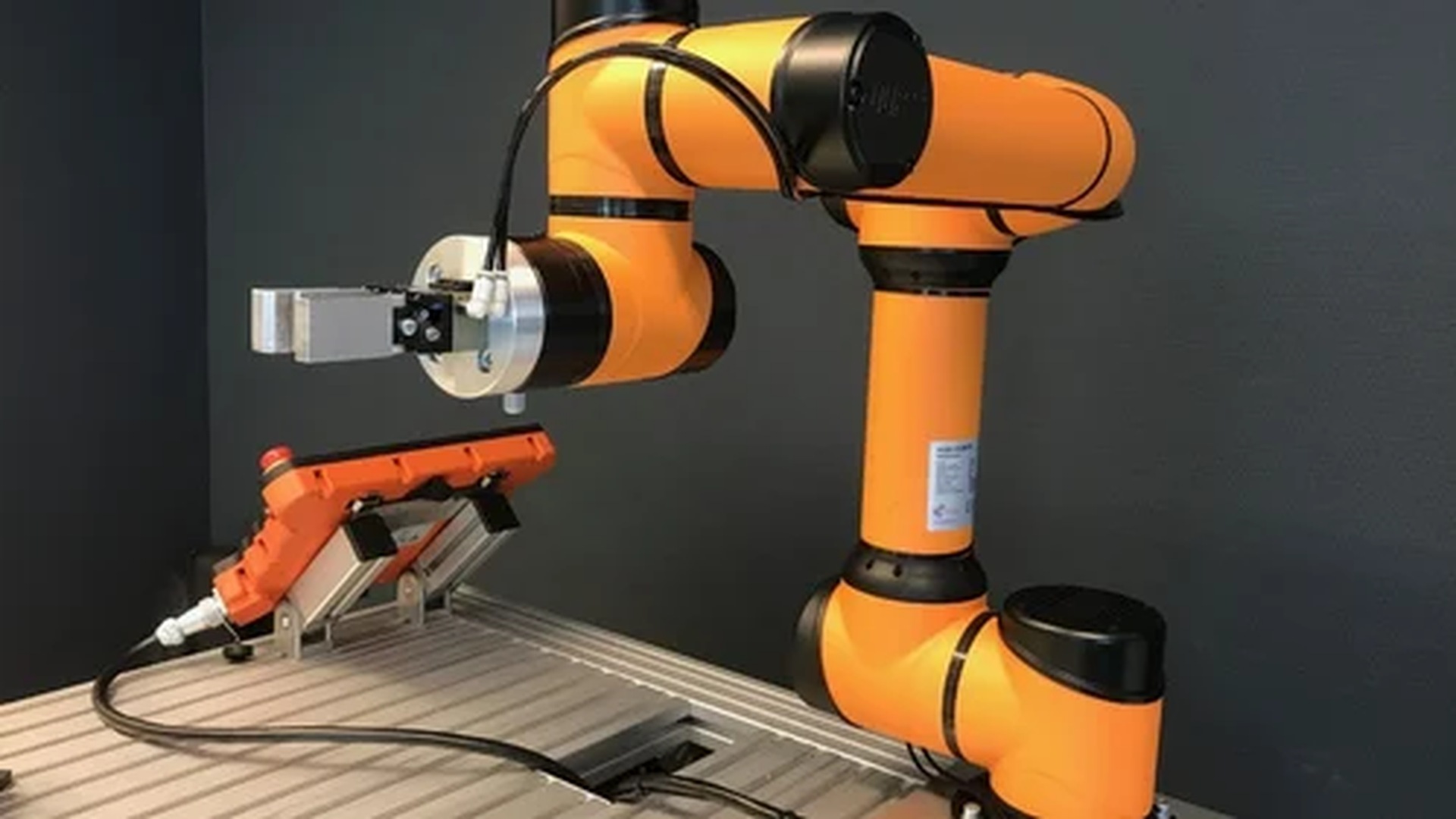
Physical AICobotEvolve Robot Lab
7 min read
A few years ago, most factories looked at robots as machines they had to buy, install, and maintain. That is changing. New robotics companies are starting to sell work itself: pay per pick, pay per route, pay per task, with remote support and continuous improvement included.
This is the real meaning of Physical AI becoming turnkey. The robot is no longer just metal and motors. It comes with vision, software, safety, monitoring, and a service model. For India, this is a chance to build the next layer of manufacturing technology, not only buy it from outside later.
The Market Is Changing
The strongest signal is not one viral humanoid video. The stronger signal is how startups and investors are talking about robotics.
Y Combinator's Manufacturing and Robotics category lists 109 funded startups. Many are not selling robots in the old way. They are selling outcomes: warehouse picking, remote recovery, robot testing, physical agents, and simple ways for factories to start without a huge upfront purchase.
That is a major change. In the old model, the factory bought the robot first and solved the deployment later. In the new model, the customer expects the vendor to own more of the result: setup, uptime, monitoring, support, and improvement.
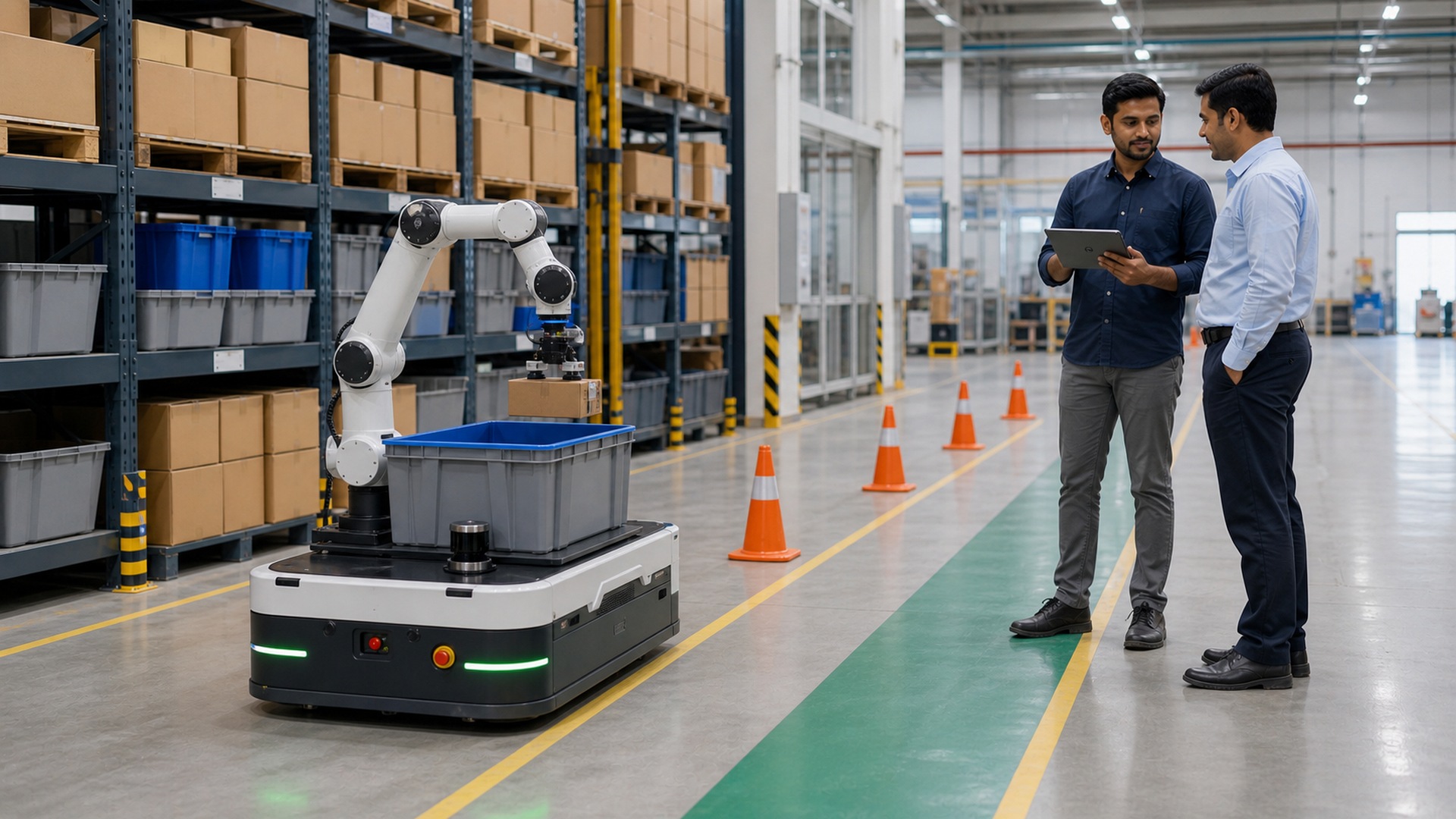
Robotics as a servicePhysical agentsOutcome pricing
What Physical AI Really Means
Physical AI is simple to understand. It means a robot can sense the world, make a limited decision, and move safely.
A normal robot arm follows a fixed path. It expects the part to be in the same place every time. Physical AI adds cameras, sensors, maps, and AI models so the robot can handle more variation.
But this does not make engineering disappear. A real factory still needs fixtures, safety zones, PLC signals, logs, operator training, and recovery plans. AI helps the robot adapt. It does not replace the deployment work.
The Factory Floor Still Decides
Turnkey sounds easy. The floor decides if it is real.
Most failures are small. A camera sees a shiny part differently. A tray moves after maintenance. A worker clears a jam and puts material in a new position. A network delay slows the response. The robot stops, and nobody knows why.
That is why Physical AI must be built around simple factory discipline:
- stable lighting
- clear part location
- safe movement zones
- proper stop rules
- logs that explain failures
- operators who know when to take over
If these basics are weak, a larger AI model will not fix the project.
Safety Has to Come First
NVIDIA's Halos for Robotics announcement shows where the industry is going. Safety is not a small add-on at the end. It has to be part of the full system.
When AI moves from a screen into a moving machine, the risk changes. Sensors, controller logic, emergency stop, logs, cybersecurity, and certification all matter.
For Indian factories, this is very practical. A cheaper robot is not cheaper if it cannot run safely across shifts. A smarter robot is not useful if one person has to stand beside it all day.
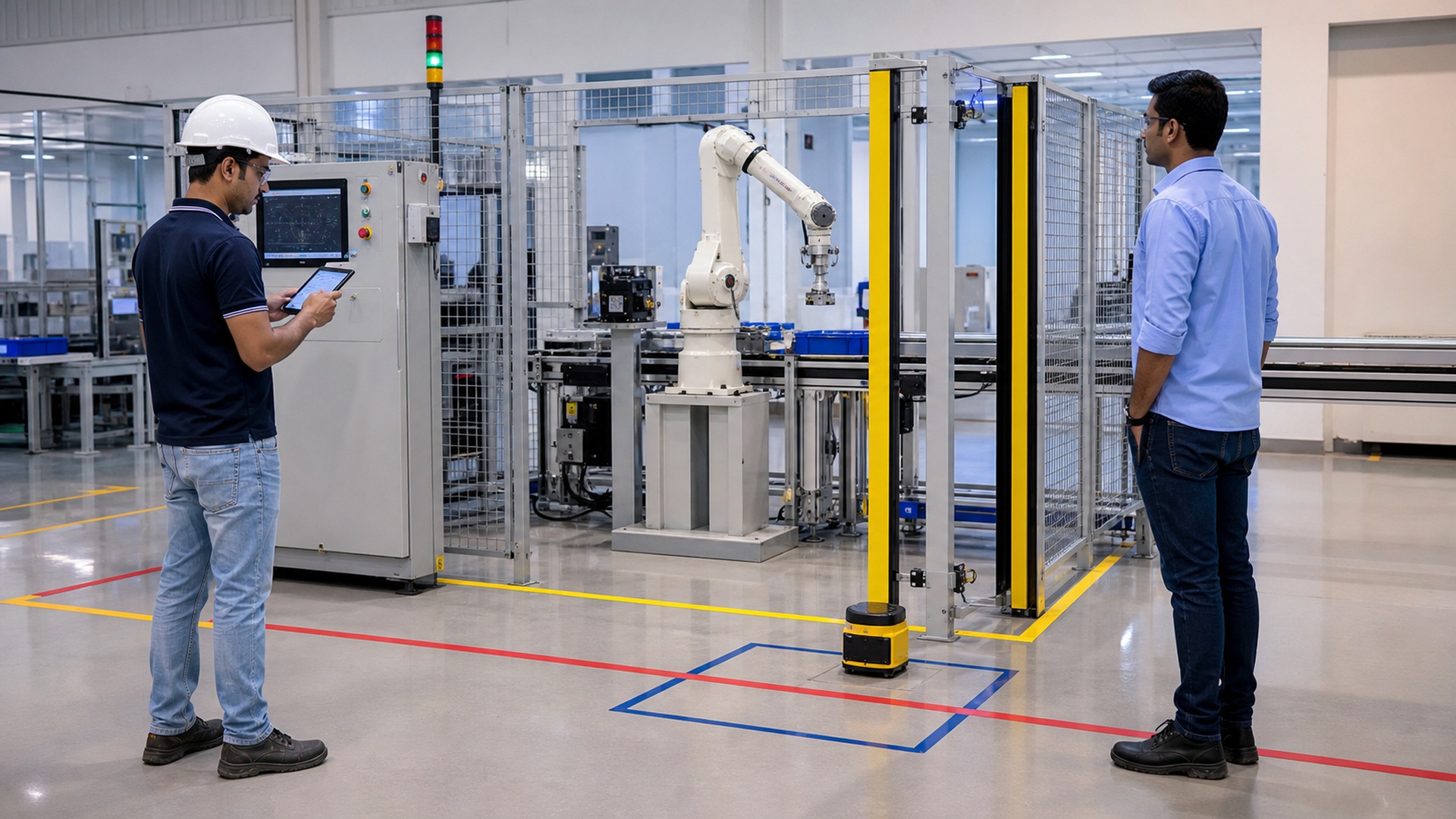
SafetyValidationFactory trust
India Is Also Moving
This is not only a Silicon Valley story. India is putting real money behind deep tech.
The Government of India's RDI Scheme has a Rs 1 lakh crore corpus over six years. It supports high-risk innovation and names areas like robotics, AI, quantum, space, and strategic technologies.
Startup India Fund of Funds 2.0 adds another Rs 10,000 crore corpus for venture capital. The IndiaAI Mission has a Rs 10,371.92 crore outlay for AI compute, foundation models, datasets, skills, startup support, and safe AI.
The direction is clear. India wants to build more deep-tech capability. Physical AI fits directly into that direction.
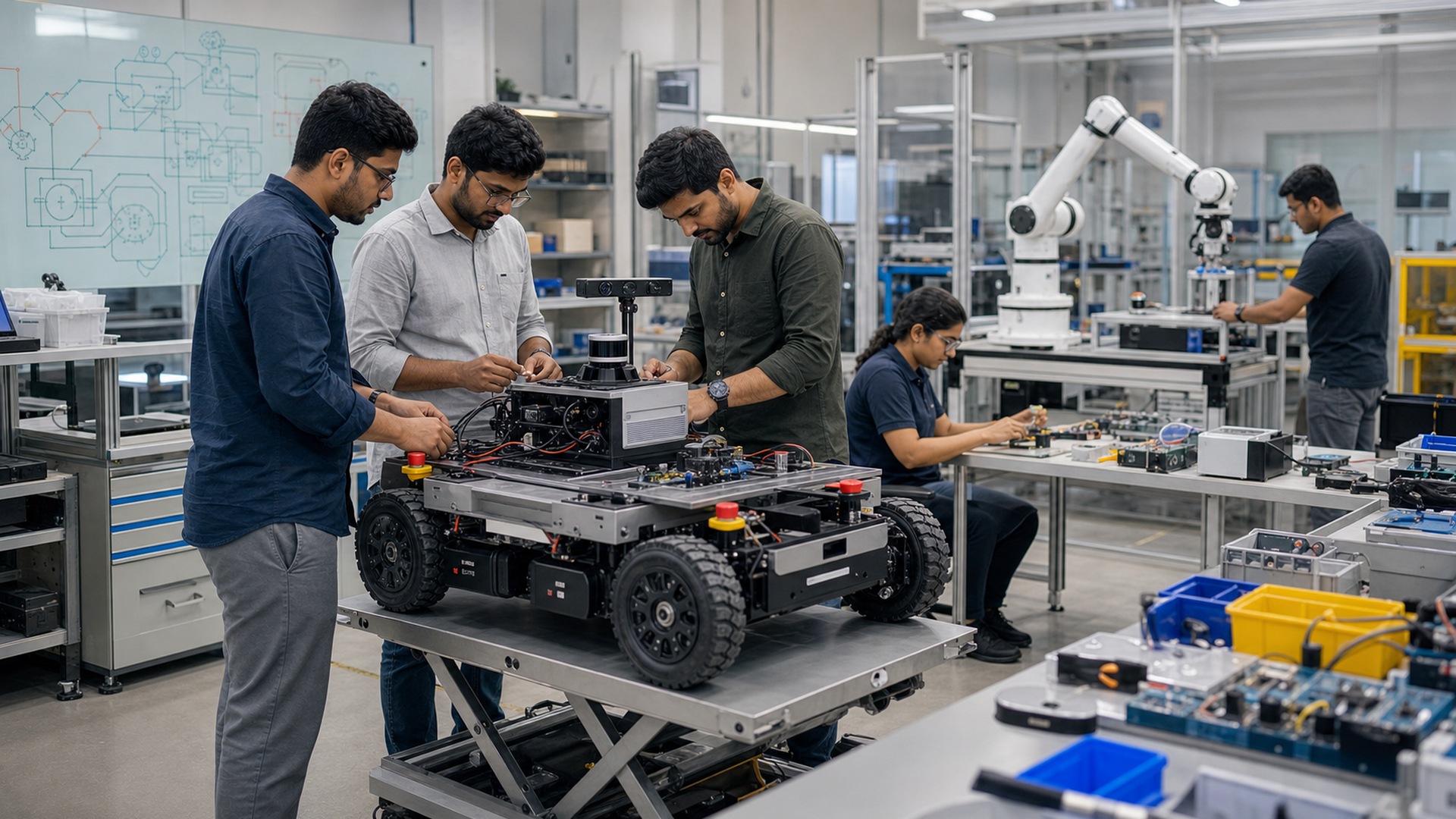
India deep techRobotics R&DBuild, not just buy
What This Means for a Factory Owner
The first step is not to buy the most advanced robot. The first step is to choose the right job.
Start with work that is repetitive, painful, risky, or slowing down a good machine. Machine tending, packing, polishing, inspection, material movement, and visual QC are better starting points than a general-purpose robot.
Humanoids are useful as a signal. Agility Robotics has opened a dedicated Physical AI hub and says its Digit robot is already deployed with industrial customers. That shows where the market is going. But most Indian factories should still begin with practical automation that can pay back and build confidence.
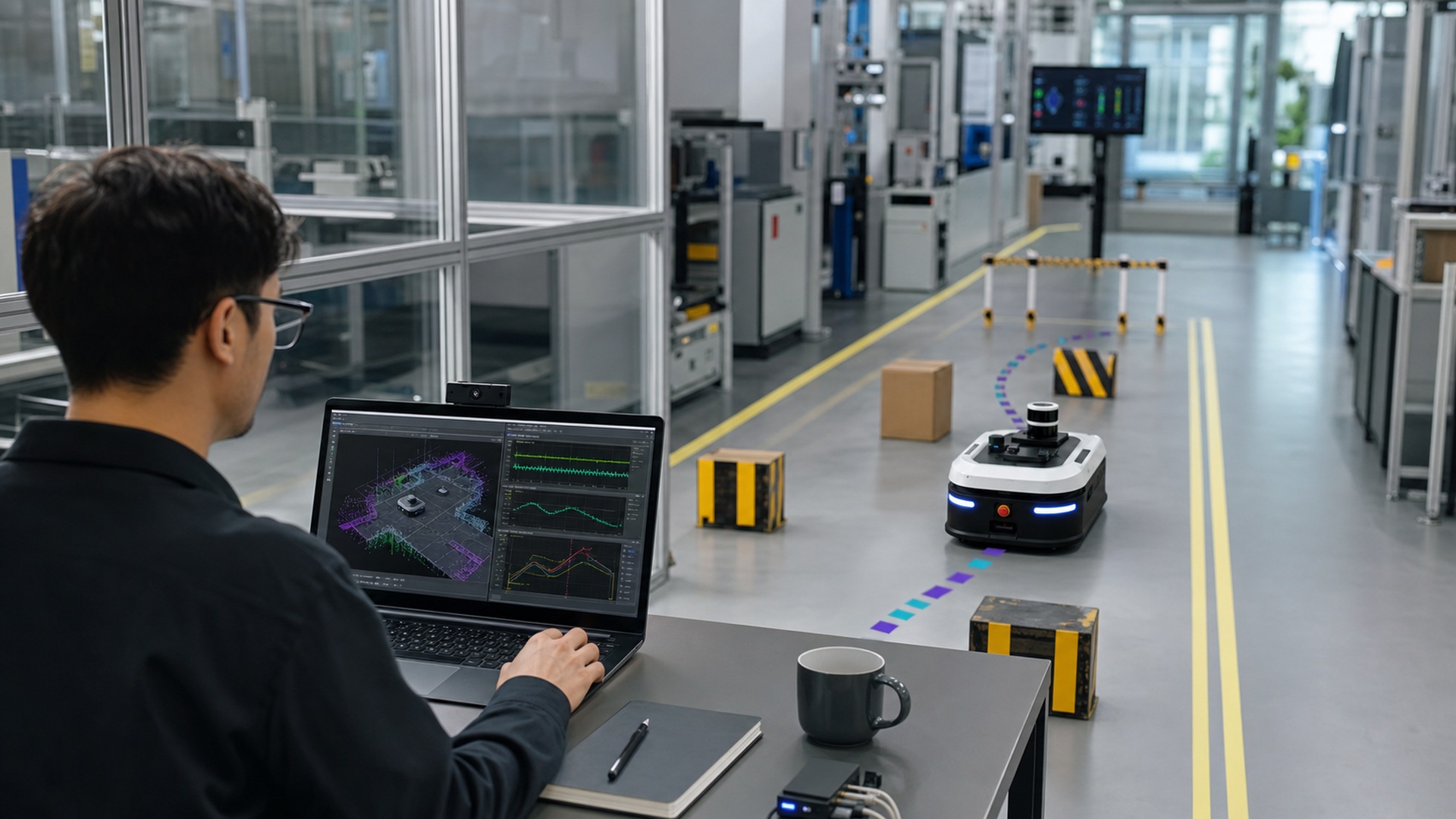
ROS2SimulationTesting
Start With One Useful Job
A good pilot should be boring in the best way. One job. One line. One clear result.
- Pick one painful job and write the success metric before buying hardware.
- Study the real floor: lighting, part variation, operator movement, power, air, and network.
- Keep safety clear: AI can help decide, but safety must protect people every time.
- Demand logs: when the robot stops, your team should know why.
- Plan recovery: the robot should stop safely and ask for help when it is unsure.
This is how a pilot becomes production instead of only a video.
Where ERL Fits
At Evolve Robot Lab, we see the robot as one part of the deployment. The real job includes process study, simulation, safety, PLC integration, operator training, commissioning, and support after the robot starts running.
Physical AI gives Indian factories a clear direction for the next decade. A cobot that tends a machine reliably is part of that future. A Gaja Bot route that records patrol issues is part of that future. A ROS2 simulation that catches field problems before testing is part of that future.
The goal is not to replace workers with a talking robot. The goal is to reduce risk, improve throughput, and help operators do better work. India should build this capability here.
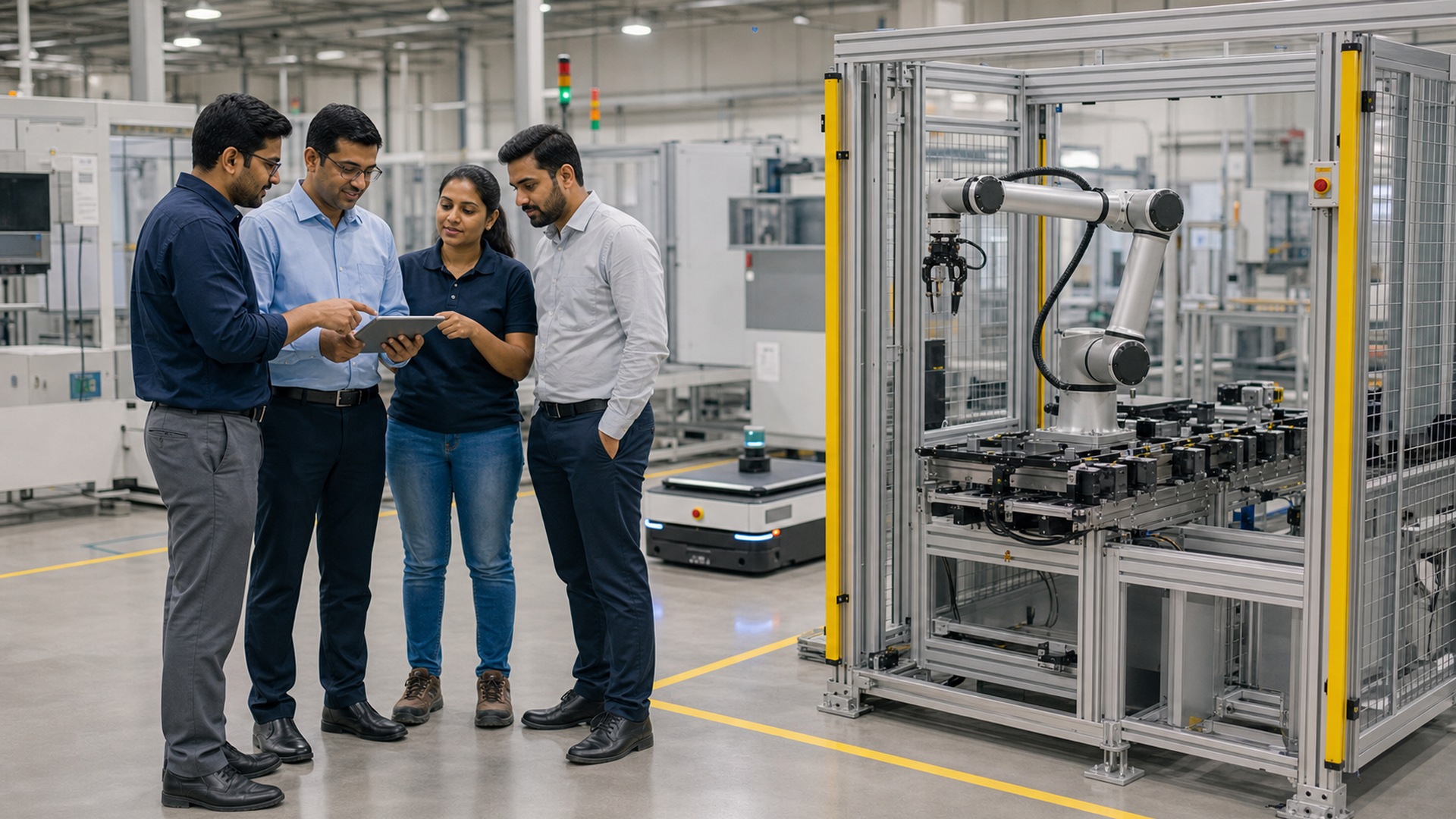
ERLCommissioningFactory automation
Quick Readiness Check
- You can explain the target task in one sentence.
- You know how to measure success.
- The floor condition is stable enough for a robot.
- The robot has a safe stop and recovery plan.
- The operator knows when to trust it and when to take over.
- The logs can explain failures clearly.
If these points are weak, fix the deployment plan before adding more AI.
Build the First Practical Cell
Evolve Robot Lab helps factories move from automation idea to working cell: ROS2 systems, cobots, AMRs, simulation, safety, and commissioning. Talk to us about a practical automation pilot.