Blog
Robotics Training in Chennai: Internship, Diploma & ROS2 Programs | Evolve Robot Lab
8 min read
Robotics training ChennaiROS2 internshipEvolve Robot Lab
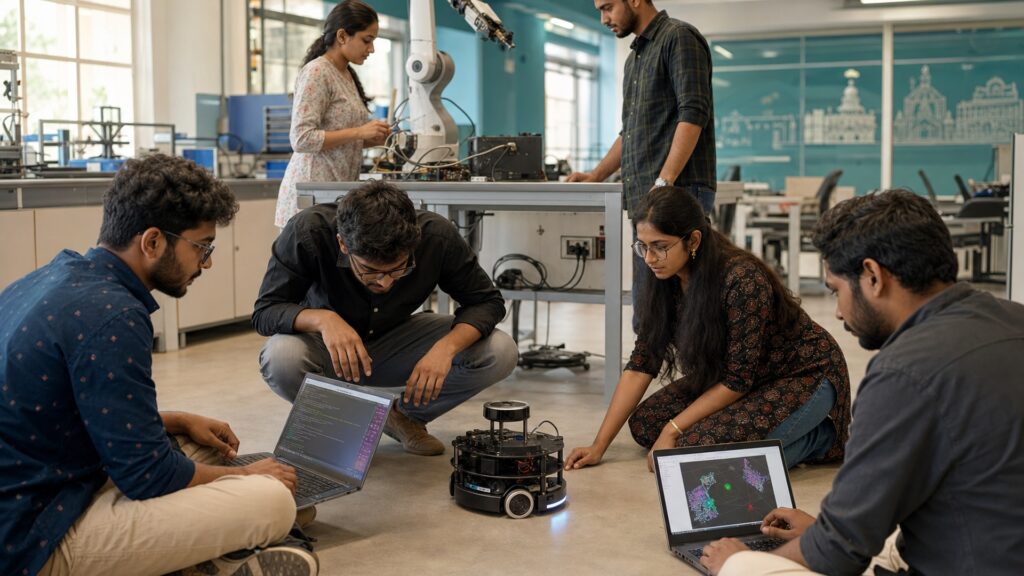
Students across India are learning robotics theory in classrooms. Factories, ports, and defence labs are hiring people who can build — wire sensors, debug ROS2 nodes, train vision models, and ship working prototypes. That gap is exactly why Evolve Robot Lab runs internship, diploma, and short-course programs in Robotics, AI/ML, and Embedded Systems from Chennai.
We have trained 180+ engineers on the same ROS2 stack we use for Gaja AMRs, cobot integrations, and Yali-class legged platforms. This post explains what each program covers, who it is for, and how to apply.
Why Hands-On Robotics Training Matters in 2026
Robotics, AI, and embedded systems are execution disciplines. Writing pseudocode on paper does not teach you why a lidar frame drops at 2 a.m. on a commissioning floor, or why a UART timing issue kills your motor driver.
Industry rewards engineers who can:
- integrate hardware and software into one working system
- debug under time pressure with incomplete documentation
- communicate trade-offs to founders, plant managers, and teammates
At ERL, every program follows one rule: learn by building, not by observing. Interns contribute to real lab work — not shadowing exercises with no deliverable.
Programs at Evolve Robot Lab
1. Robotics Internship
Your first exposure to how robots are built outside textbooks. Participants work on prototypes — mobile robots, manipulators, perception pipelines — with mentors who ship industrial systems. You are expected to design, implement, test, and iterate.
Typical skills gained: ROS2 basics, sensor integration, Git workflow, system debugging, documentation.
2. Diploma in Robotics & ROS2
A structured, long-form track for depth. Curriculum spans ROS2 development, navigation, SLAM, computer vision, and embedded systems — with projects on Yali, Anku, and Asura platforms in our lab.
By completion, learners should be able to build and explain a complete robotic subsystem — not just repeat definitions from a syllabus.
3. Gen AI & Machine Learning Internship
Hands-on AI/ML for robotics and automation: data handling, model training, computer vision, and deployment concepts tied to real projects — not notebook-only exercises disconnected from hardware.
4. Focused Training (Short Courses)
Time-boxed upskilling for students or working engineers who need a fast ramp — embedded fundamentals, ROS2 modules, or vision pipelines — without a full diploma timeline.
Embedded systemsHardwareChennai
What You Actually Build (Not Just Study)
- ROS2 stacks — nodes, topics, navigation, simulation-to-real workflows (see our ROS2 career guide)
- Mobile & legged platforms — AMR behaviour, locomotion, inspection scenarios
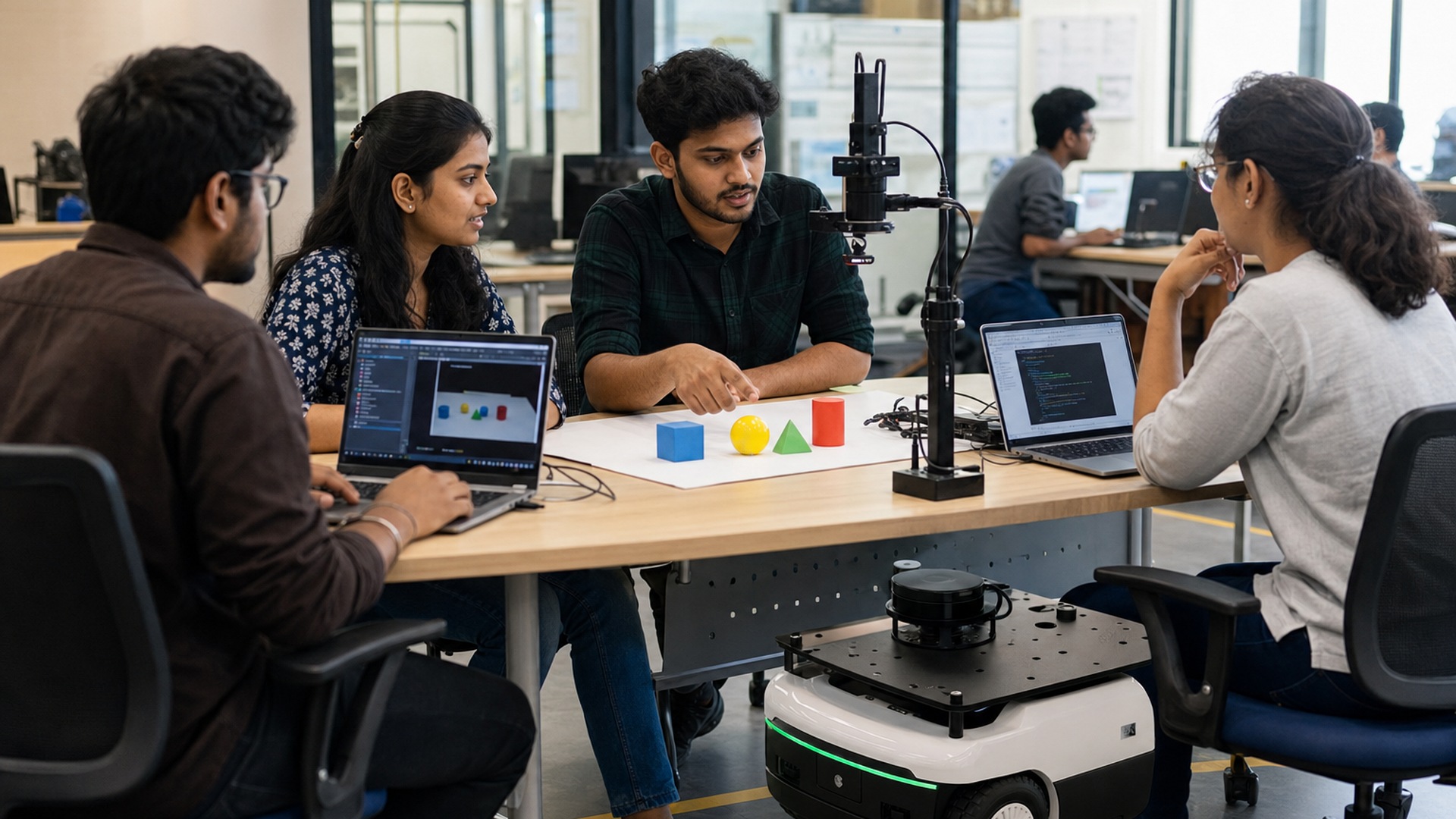
- Perception — cameras, lidar basics, model training and evaluation
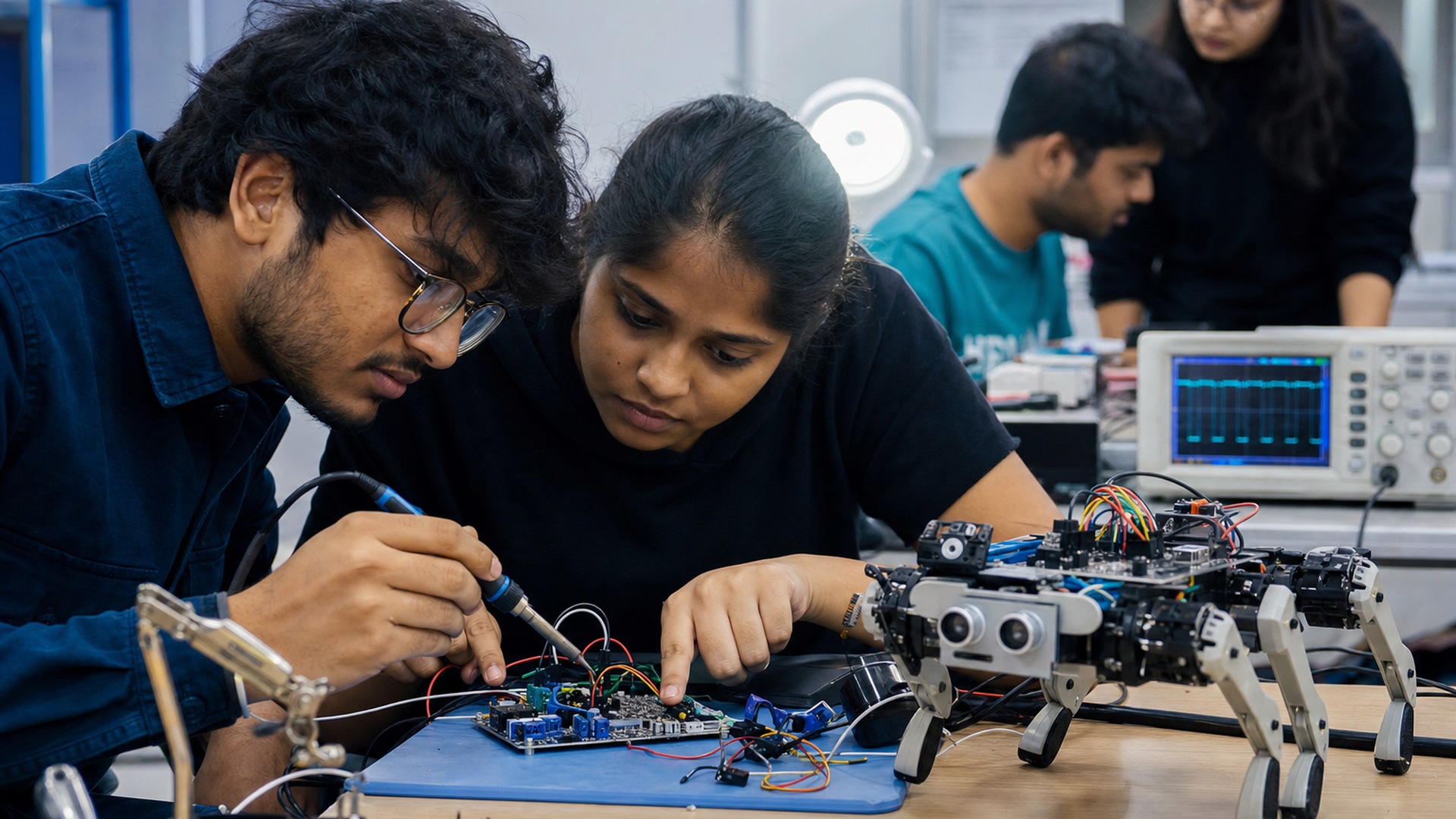
- Embedded integration — firmware, buses, power, safety interlocks
Training happens in a working robotics lab — the same environment where we integrate cobots for manufacturers and develop field platforms for ports and defence. That context matters when you interview for your first robotics role.
AI/MLComputer visionRobotics
Who Should Apply
- Engineering students (ECE, EEE, CSE, Mech) who want industry-relevant robotics skills before graduation
- Fresh graduates targeting roles as robotics engineer, embedded developer, or AI/ML engineer
- Working professionals upskilling into automation, ROS2, or embodied AI
- College departments seeking lab partnerships or structured internship pipelines
Career Paths After Robotics Training
Demand is rising across manufacturing, automotive, EV supply chain, defence, healthcare devices, and smart infrastructure. Common roles include Robotics Engineer, Embedded Systems Developer, AI/ML Engineer, Automation Engineer, and Field Integration Engineer.
India's industrial automation wave — cobots, AMRs, and eventually humanoid-class platforms — needs integrators who understand both code and commissioning. Training that skips the factory floor creates CVs, not careers.
Why Train at ERL Instead of a Generic Coaching Center?
- Builder lab, not classroom franchise — we design and deploy robots; training runs on live stacks
- 180+ alumni pipeline — proven track record across internships and diploma batches
- Chennai base — MEPZ corridor, Oragadam industrial belt, port and SME factory access for real context
- Unified ROS2 practice — same middleware across training, Gaja AMR, and industrial integration work
FAQ: Robotics Internship & Diploma in Chennai
Do I need prior robotics experience? Fundamentals in programming help. We assess fit based on motivation and basics — not whether you already own a robot.
Is this online or in-person? Core programs are hands-on in our Chennai lab. Remote-only robotics training rarely produces job-ready engineers.
How is the diploma different from the internship? Internship = structured project exposure over weeks. Diploma = deeper ROS2 curriculum, platform projects, and progressive skill milestones.
Will this help me get a job? We focus on execution skills employers test in interviews — system design, debugging, and portfolio projects. Hiring outcomes depend on your effort; we optimize for capability, not certificates alone.
How do I apply? Visit our training page and submit the application form for Robotics Internship, Gen AI Internship, or Diploma in Robotics & ROS2.
Ready to Build — Not Just Learn?
Explore programs, batch details, and the application form on our Robotics Training Chennai page → · Contact the team →