Blog
Internship, Diploma, and Training in Robotics, AI/ML, and Embedded Systems | Evolve Robot Lab
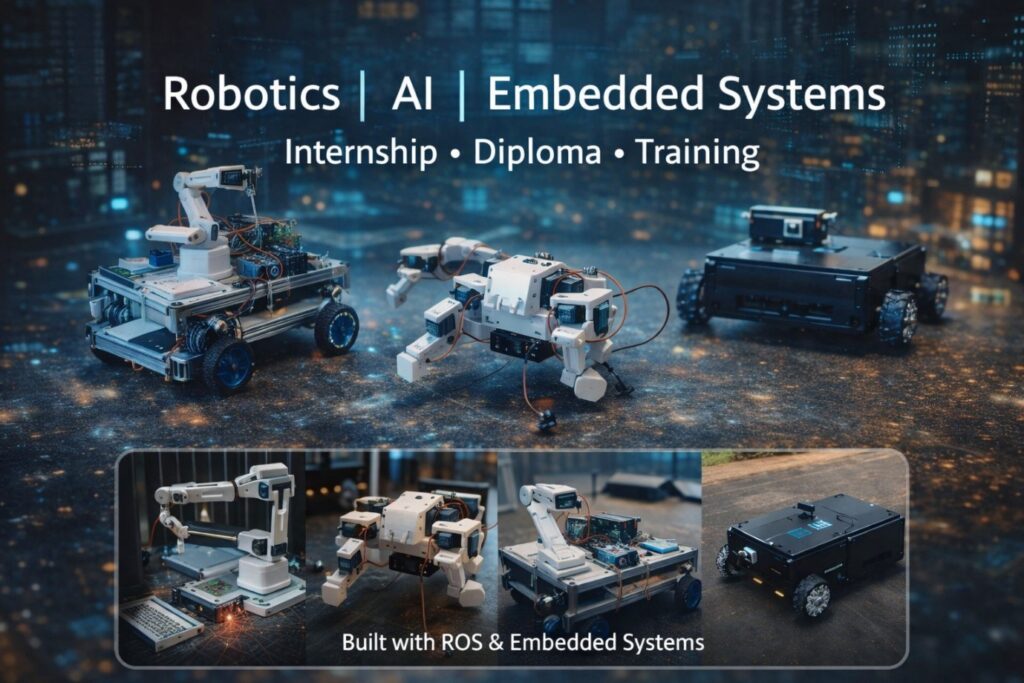
The world is shifting toward intelligent systems faster than most people realize. Robotics is automating physical work, Artificial Intelligence is redefining decision-making, and Embedded Systems are powering everything from smart devices to industrial machines.
Yet, there is a clear disconnect.
Students are learning concepts, but industries are looking for builders.
At Evolve Robot Lab, the focus is simple — bridge this gap by creating engineers who can actually build, deploy, and solve real-world problems. Internship programs, diploma courses, and hands-on training are not just educational offerings here. They are designed as transformation pipelines for future engineers.
Why Practical Learning in Robotics, AI/ML, and Embedded Systems Matters
Traditional education systems are structured around theory. While this builds foundational understanding, it often fails when applied to real-world scenarios.
In fields like Robotics, AI, and Embedded Systems, learning without execution creates incomplete skill sets. Writing code is one thing; making a robot move, training a model on real data, or interfacing hardware successfully is another.
The industry does not reward knowledge alone.
It rewards execution capability.
This is why hands-on learning is not an advantage anymore — it is a requirement. At Evolve Robot Lab, every program is structured around one core idea:
learn by building, not by observing.
Internship Programs in Robotics, AI, and Embedded Systems
Internships serve as the first real exposure to how technology works outside textbooks. They place learners in an environment where problems are not predefined and solutions are not always straightforward.
Participants work on real systems such as robotic prototypes, AI-based applications, and embedded hardware projects. The process involves understanding the problem, designing a solution, implementing it, and refining it through testing.
This experience develops more than technical knowledge. It builds:
- problem-solving ability
- system-level thinking
- confidence in handling real-world challenges
Unlike passive internships that focus on observation, the approach here is centered on contribution. Learners are expected to build, test, and iterate — which is where actual learning happens.
Diploma Programs in Robotics, AI/ML, and Embedded Systems
Diploma programs are designed for individuals who want depth, not just exposure. These are structured, long-term programs that take learners from fundamentals to advanced system development.
In Robotics, learners work with kinematics, control systems, and frameworks like ROS. In AI and Machine Learning, the focus is on data handling, model building, and deployment. Embedded Systems training involves microcontrollers, sensor integration, and real-time system design.
The learning path is progressive. Each concept builds on the previous one, ensuring clarity and strong foundations. More importantly, every stage includes practical implementation.
By the end of the program, learners are not just familiar with the domain — they are capable of building complete, working systems independently.
Training Programs for Fast Skill Development
Training programs are focused and time-efficient. They are ideal for those who want to quickly gain practical skills or transition into a new domain. These programs remove unnecessary complexity and focus on what actually matters. Learners work on real tasks from the beginning, ensuring that every concept is applied immediately.
Whether it is building a machine learning model, programming a microcontroller, or developing a robotic system, the emphasis remains on execution. The result is simple: clarity, confidence, and the ability to build.
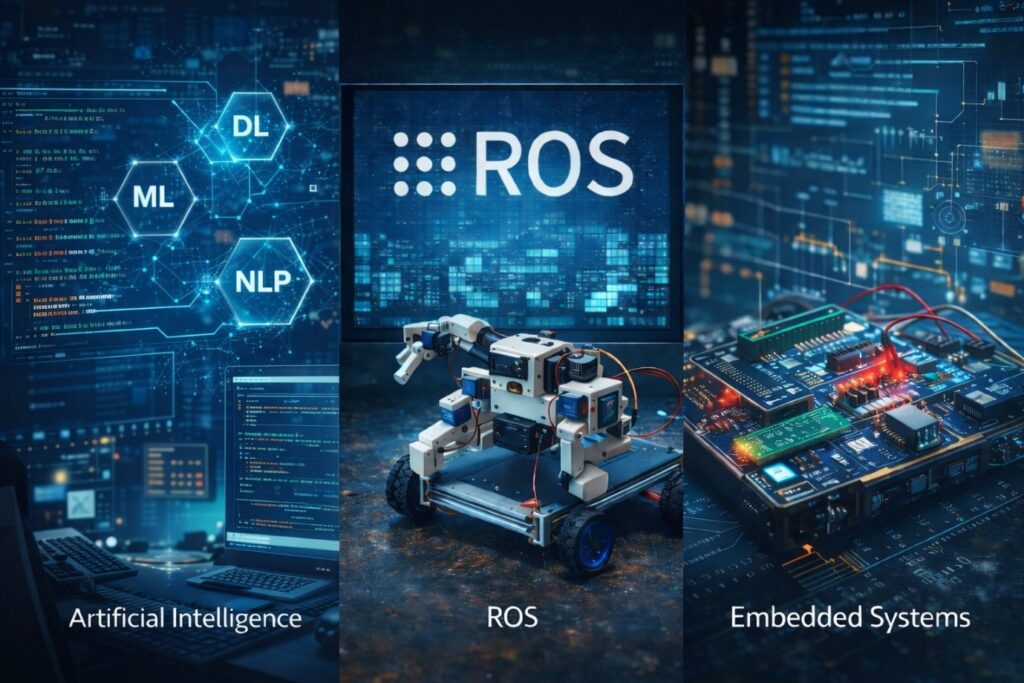
Key Domains Covered
The programs at Evolve Robot Lab are centered around three major domains that define modern technology.
Robotics focuses on building intelligent machines that interact with the physical world. It involves sensors, actuators, control systems, and software integration.
Artificial Intelligence and Machine Learning deal with data-driven decision-making. These technologies enable systems to learn patterns, make predictions, and improve over time.
Embedded Systems form the backbone of all hardware-based technology. They bring intelligence into devices by enabling real-time processing and control. Together, these domains create a powerful combination that drives innovation across industries.
Benefits for Students and Professionals
Learners who undergo structured training in these domains gain a clear advantage. They develop practical skills that align with industry expectations, making them job-ready from an early stage. They become comfortable with tools, systems, and real-world problem-solving. This reduces the gap between learning and employment.
For professionals, these programs provide an opportunity to upgrade skills and stay relevant in a rapidly evolving technological landscape. Organizations also benefit by hiring individuals who can contribute immediately without extensive retraining.
Career Opportunities in Robotics, AI/ML, and Embedded Systems
The demand for skilled professionals in these fields continues to grow across multiple industries. Career paths include roles such as Robotics Engineer, AI/ML Engineer, Embedded Systems Developer, and Automation Engineer. These roles are critical in sectors like healthcare, manufacturing, automotive, aerospace, and smart technology. Beyond employment, these skills also open doors to innovation and entrepreneurship. With the right foundation, individuals can build products, develop solutions, and create their own ventures.
Future Scope of Robotics, AI, and Embedded Systems
The future will be built on intelligent, interconnected systems. Robotics will become more autonomous, AI systems will become more adaptive, and embedded systems will continue to integrate intelligence into everyday devices.
As these technologies evolve, the need for individuals who can design and build such systems will increase significantly. Those who focus on hands-on learning and real-world application will be in a stronger position to lead this transformation.
Conclusion
Internship programs, diploma courses, and training in Robotics, AI/ML, and Embedded Systems are no longer optional for those aiming to enter deep technology fields. They are essential pathways that transform learners into builders.
At Evolve Robot Lab, the goal is not just to teach technology, but to develop the ability to create with it. Because in the end, the future will not be shaped by those who understand technology but by those who can build it