Blog
Why We Simulate Before We Build: The Sim-to-Real Stack Behind Evolve Robot Lab’s Robots
Sim-to-realGazeboEvolve Robot Lab
8 min read
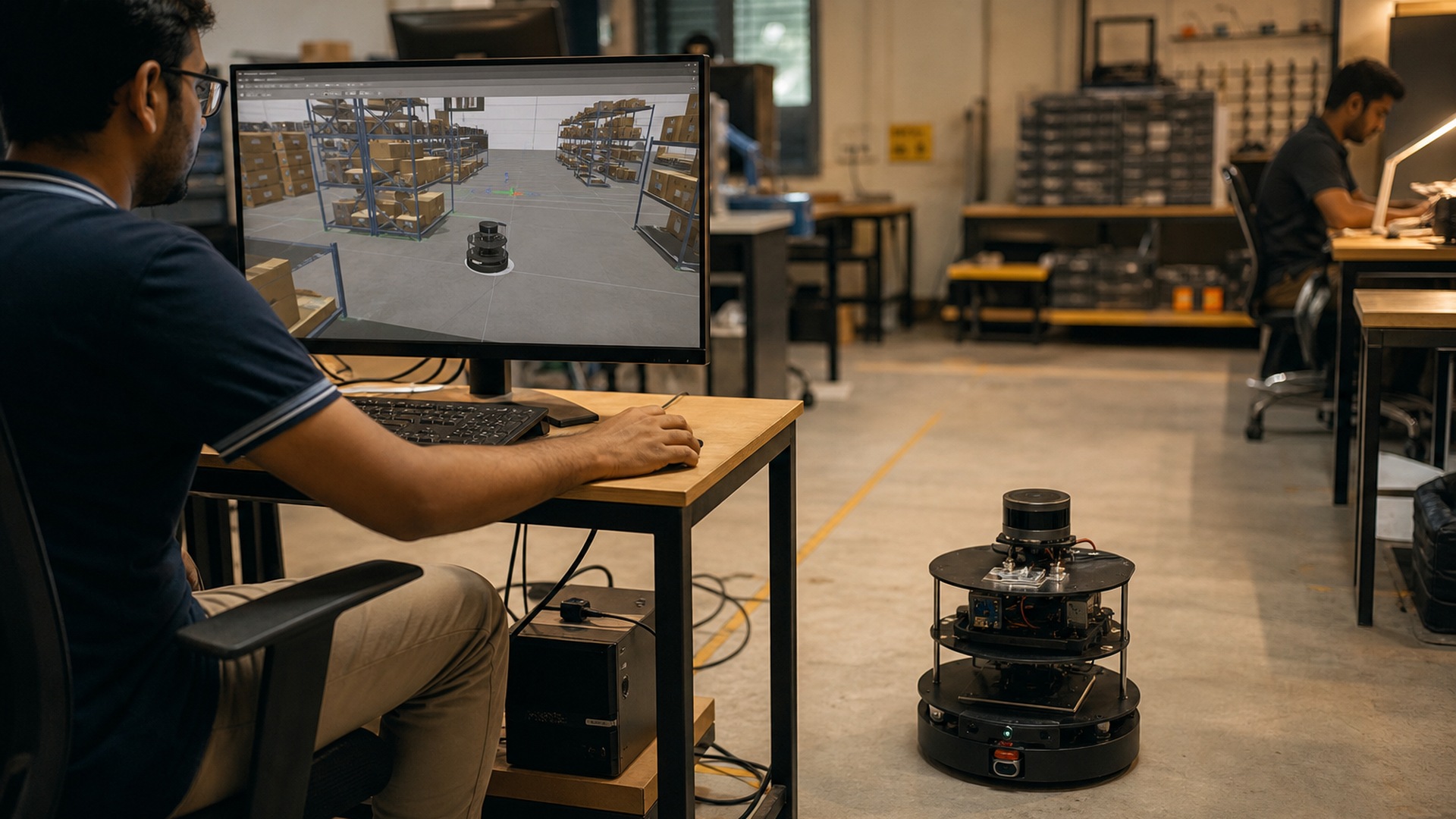
The most expensive way to program an industrial robot is to do it live, on a production line that's already running. Every test move is a risk — to the fixture, to nearby equipment, to the people standing close enough to step in if something goes wrong. Every mistake costs line downtime that a factory manager has to explain upward. And by the time you've found the problem, you've usually found it the hard way.
This is the entire argument for simulating before building. Not because it's best practice on a slide, but because it moves the expensive mistakes from the factory floor into a virtual environment where they cost nothing but time.
Simulation Isn't One Tool — It's a Set of Judgment Calls
A common mistake we see is treating simulation as a single checkbox — “did you simulate it, yes or no.” In practice, the right simulator depends entirely on what you're building and what you're trying to de-risk. Using one tool for every job is usually a sign of a shop that hasn't done enough different kinds of robots yet.
At Evolve Robot Lab, the platform we reach for changes with the problem:
RobotStudio and RoboDK — Industrial Arm Programming
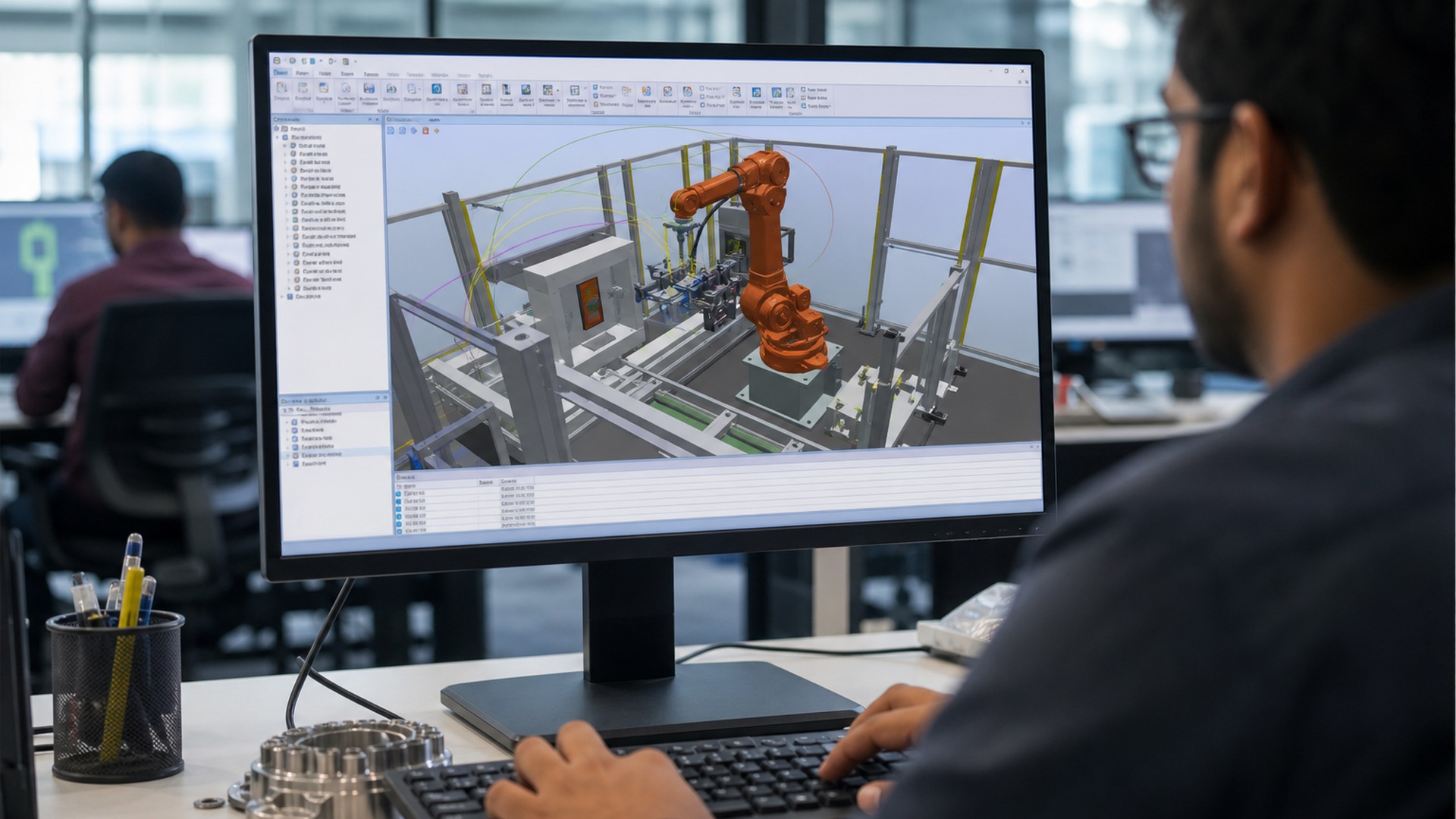
For fixed industrial arms — ABB and other brands — these tools let us build the cell virtually, program reach and cycle paths offline, and check for collisions before the robot ever moves on the real floor. This was the exact workflow behind our ABB IRC5 RAPID programming and PROFINET integration work at ArcelorMittal Oragadam: the cell geometry, the reach envelope, and the cycle timing were all validated in simulation before a single instruction ran on the live line. For a steel plant running continuous production, that's not a nice-to-have — it's the difference between a clean integration and an expensive shutdown.
RobotStudioRoboDKOragadam
Gazebo — ROS2-Native Platform Testing
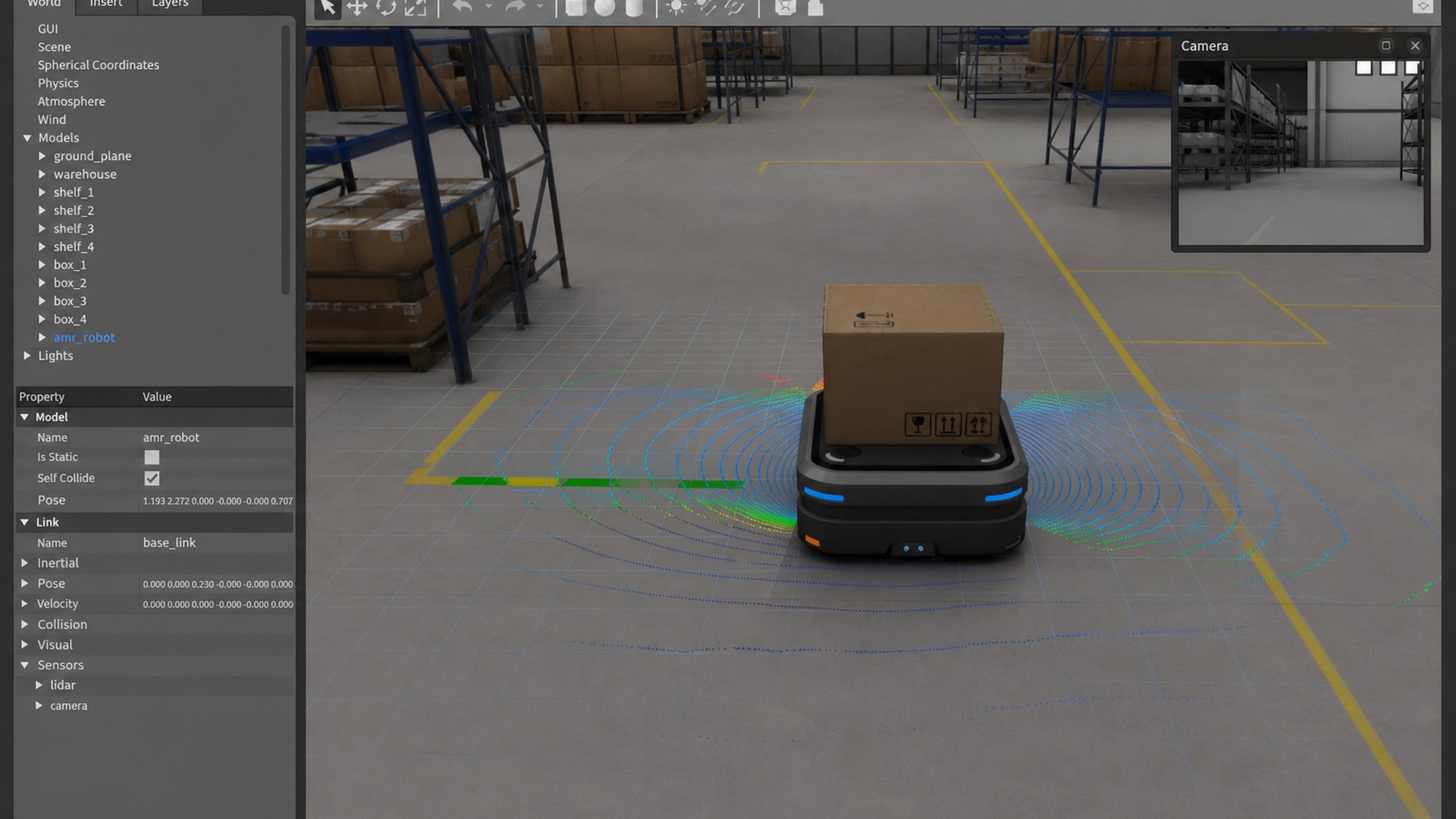
For autonomous mobile robots and ROS2-native platforms like Gaja Bot, Gazebo lets us test navigation, sensor fusion, and control logic against a simulated environment before the physical platform exists or before it's deployed somewhere new. This matters most for platforms going into environments we haven't operated in before — a new factory layout, a port yard, a site with constraints we're seeing for the first time on a drawing, not in person yet.
GazeboROS2AMR
MuJoCo and CoppeliaSim — Dynamics and Contact-Heavy Work
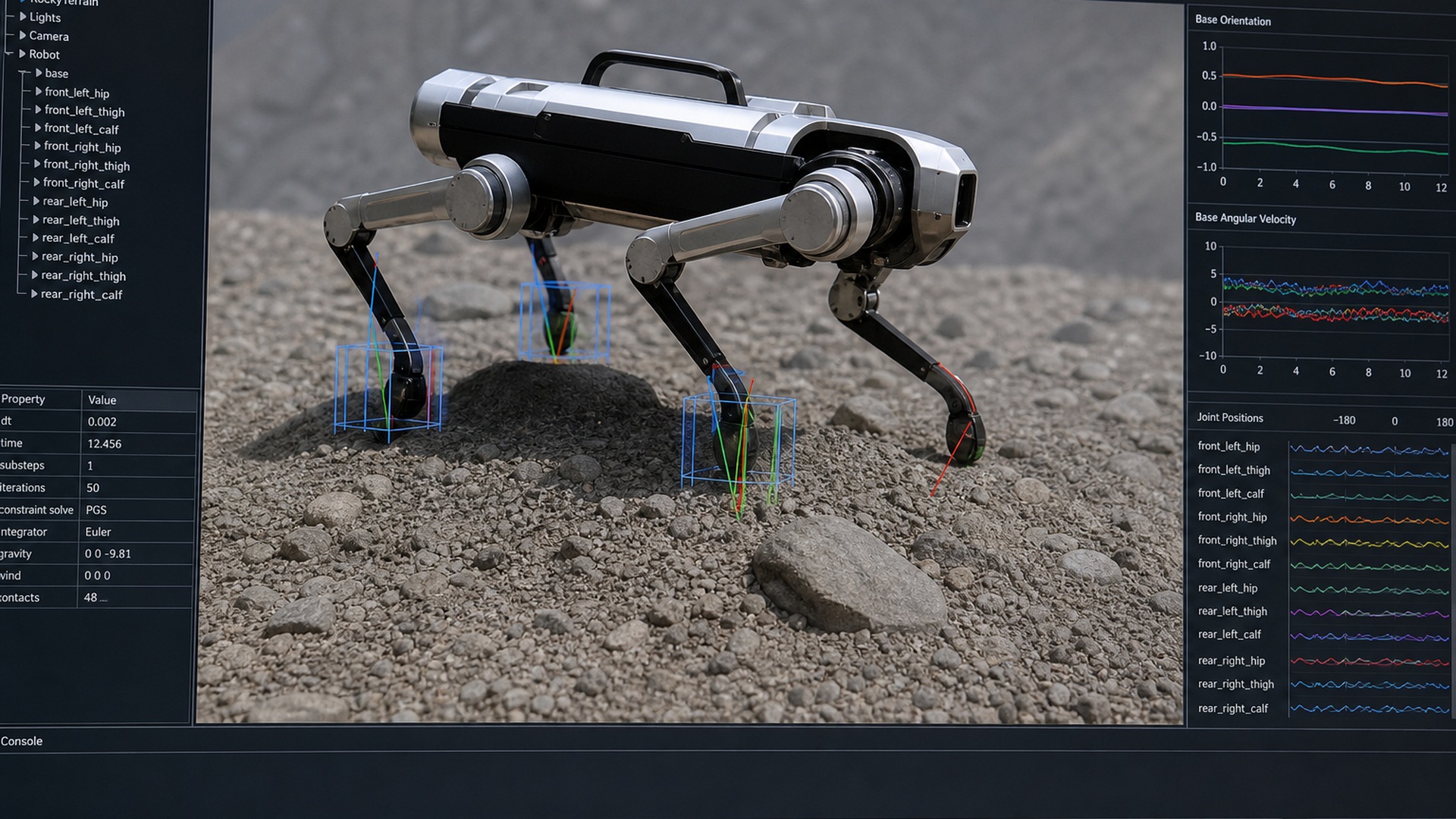
Some problems aren't about navigation or reach — they're about physics. Legged robot gait development for Yali, and manipulation tasks where contact forces, grip stability, and balance actually matter, need a simulator that models dynamics accurately, not just kinematics. MuJoCo and CoppeliaSim are built for exactly that kind of contact-rich, physically accurate simulation, which is where a lot of quadruped and manipulation work lives or dies before it ever reaches hardware.
MuJoCoCoppeliaSimQuadruped
What Simulation Doesn't Solve
Simulation gets you most of the way there, not all of it, and we'd rather say that plainly than oversell it. Sensor noise, exact fixture tolerances, cable routing, lighting conditions, and the small mechanical play that no CAD model captures — these are the last stretch that only shows up once a robot is actually on the floor.
That's also, honestly, why “sim-to-real” is its own discipline and not just a synonym for testing. The skill isn't just building an accurate simulation — it's knowing which gap between simulation and reality will actually bite you, and designing the transition so that gap is small and manageable instead of a surprise during commissioning.
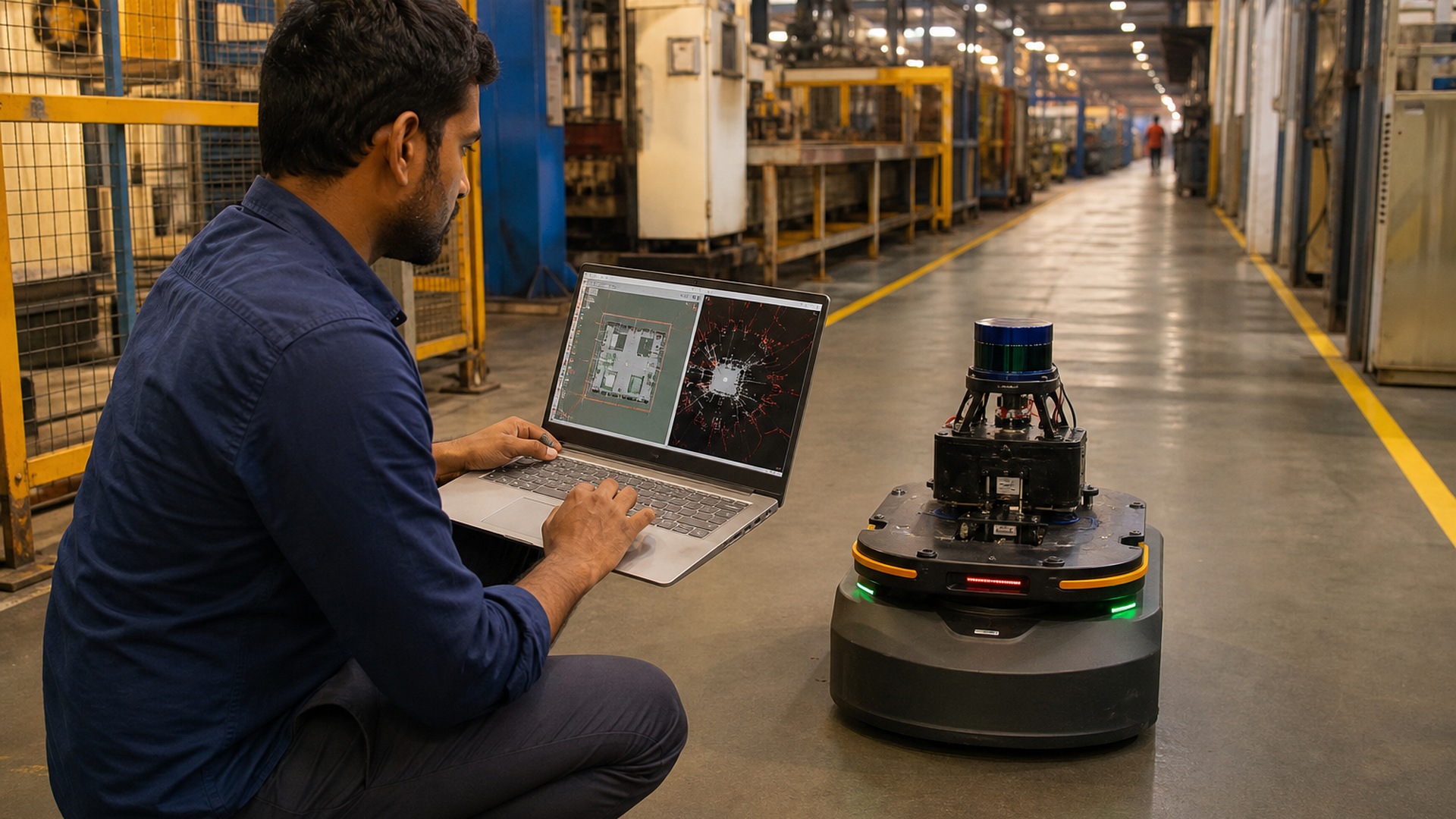
CommissioningSim-to-realField debug
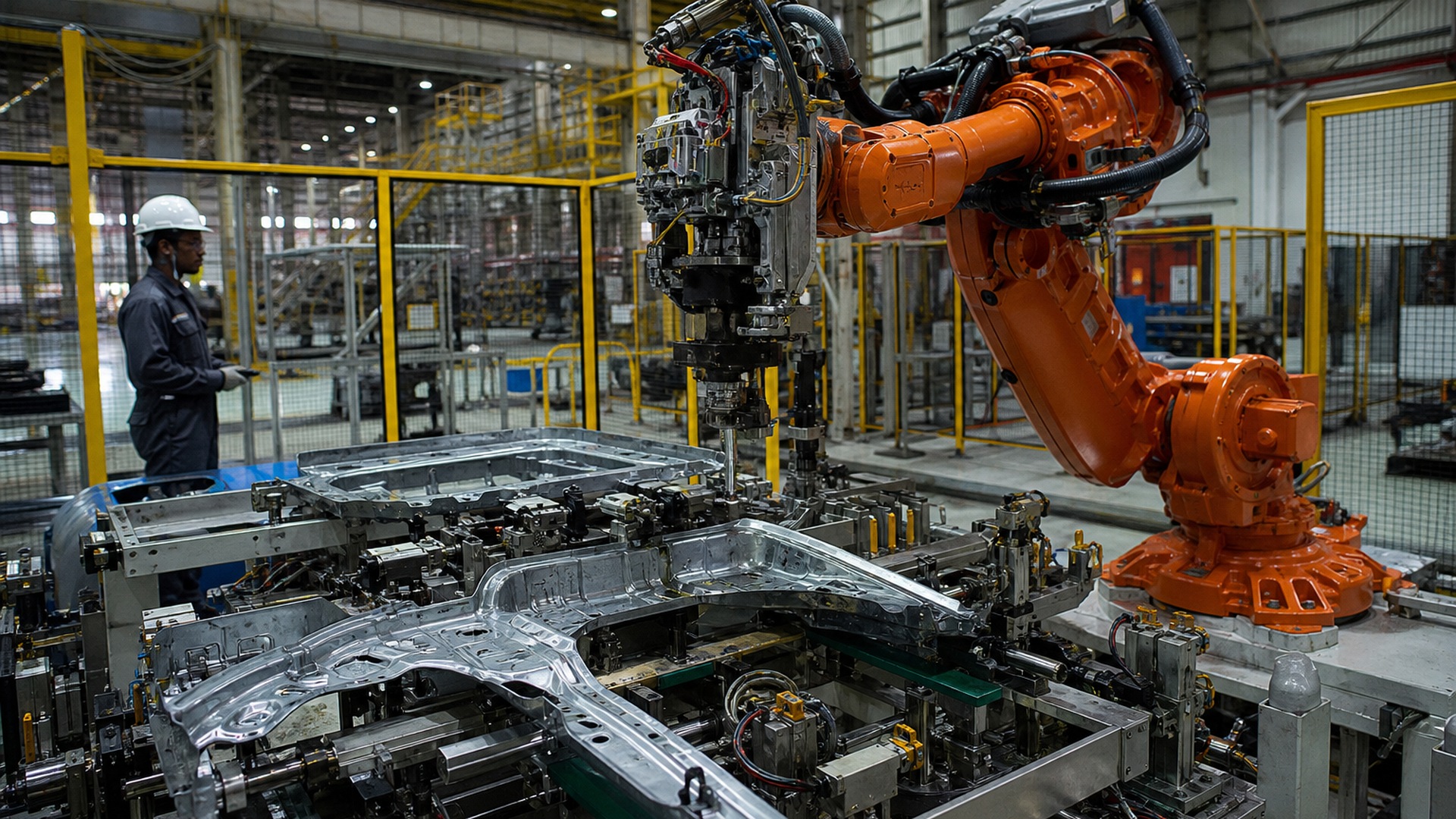
Production lineRobotStudioOragadam
Why This Matters for Whoever You're Building With
For a plant manager or technical evaluator looking at a robotics partner, the question worth asking isn't “do you simulate?” — most credible integrators will say yes. The better question is which simulation environment they'd actually use for your specific problem, and why. An integrator who reaches for the same tool regardless of whether you're asking about a fixed arm, a mobile platform, or a legged robot probably hasn't built enough variety to know the difference yet.
Working across RobotStudio, RoboDK, Gazebo, CoppeliaSim, and MuJoCo isn't about collecting tools — it's what lets Evolve Robot Lab take on an industrial arm integration, a custom AMR, or an R&D-stage legged platform with the same rigor: validate first in the environment built for that kind of problem, then bring it to the floor with the expensive mistakes already behind you.
FAQ: Sim-to-Real Robotics
What is sim-to-real in robotics? It is the practice of validating robot software and motion in simulation first, then closing the gap when you move to physical hardware — sensors, fixtures, and floor conditions included.
When should I use Gazebo vs RobotStudio? Gazebo fits ROS2 mobile robots, navigation, and sensor stacks. RobotStudio or RoboDK fit fixed industrial arms where reach, cycle time, and collision checks matter in a virtual cell.
Why use MuJoCo or CoppeliaSim? Legged locomotion, grasping, and contact-heavy tasks need accurate physics — forces, balance, and slip — not just path planning.
Does simulation replace onsite testing? No. It removes the expensive failures early. The last mile — noise, lighting, mechanical tolerances — still requires disciplined floor debugging.
Validate Before You Commission
Evolve Robot Lab builds and integrates industrial robots, AMRs, and legged platforms — validated in simulation before they ever touch your floor. Get in touch to talk through your project →