Blog
Why Learning ROS2 Is the Most Important Career Move for India’s Robotics Engineers
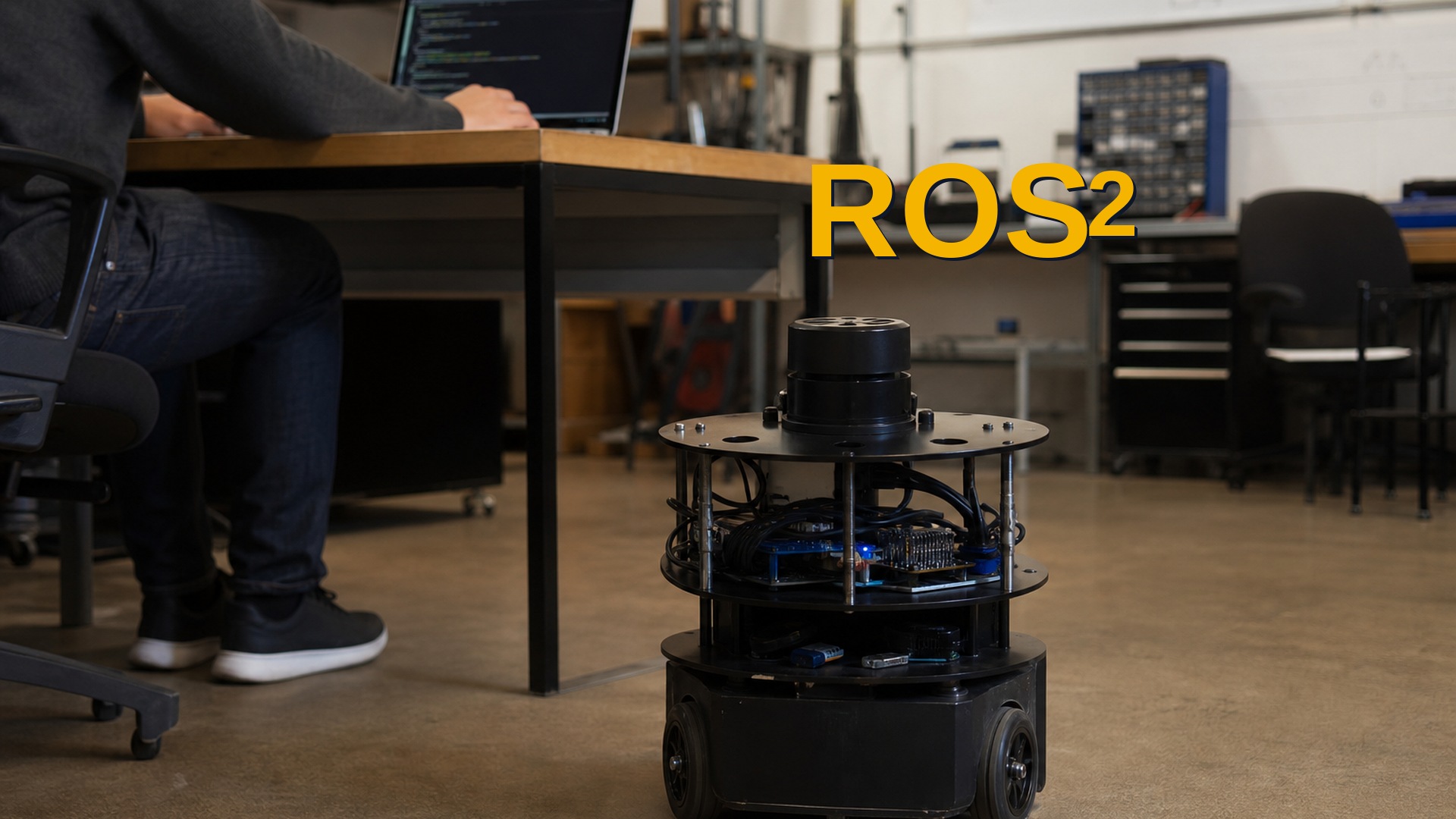
ROS2TurtleBotEvolve Robot Lab
9 min read
Every few years, one skill becomes the baseline for an entire industry — not because it is trendy, but because everyone has agreed to build on it. For robotics today, that skill is ROS2. If you are a student or early-career engineer in India, the gap is rarely ideas or hardware. It is people who can build on a real robotics stack.
What Is ROS2? (Simple Explanation)
ROS stands for Robot Operating System, but it is not an operating system like Windows or Linux. Think of it as middleware — shared plumbing that lets a robot's software parts talk to each other.
Your camera node publishes what it sees. Your motor driver node listens for speed commands. Your navigation node plans a path. ROS2 gives them a common language: topics (broadcast data), services (ask/answer tasks), and actions (long-running jobs like “drive to this point”).
ROS2 is the current generation — built for real-world use: better timing, security, and multi-robot systems. ROS1 was great for labs; ROS2 is what serious products use now.
Why ROS2 Matters for Your Career
Learning ROS2 is not betting on one company's private SDK. Defense platforms, warehouse AMRs, quadrupeds, robotic arms, drones, and factory automation — most serious builds use ROS2 or something compatible with it.
When a hiring manager asks “have you worked on a real stack?”, they usually mean: Can you run nodes, read sensor data, debug when the robot fails on the floor, and ship something reliable? That is ROS2 territory.
- AMRs — navigation, fleet coordination, docking
- Manipulators — MoveIt, grasp planning, industrial cells
- Drones — PX4 + ROS2 bridges, perception, autonomy
- Simulation — test before you break hardware
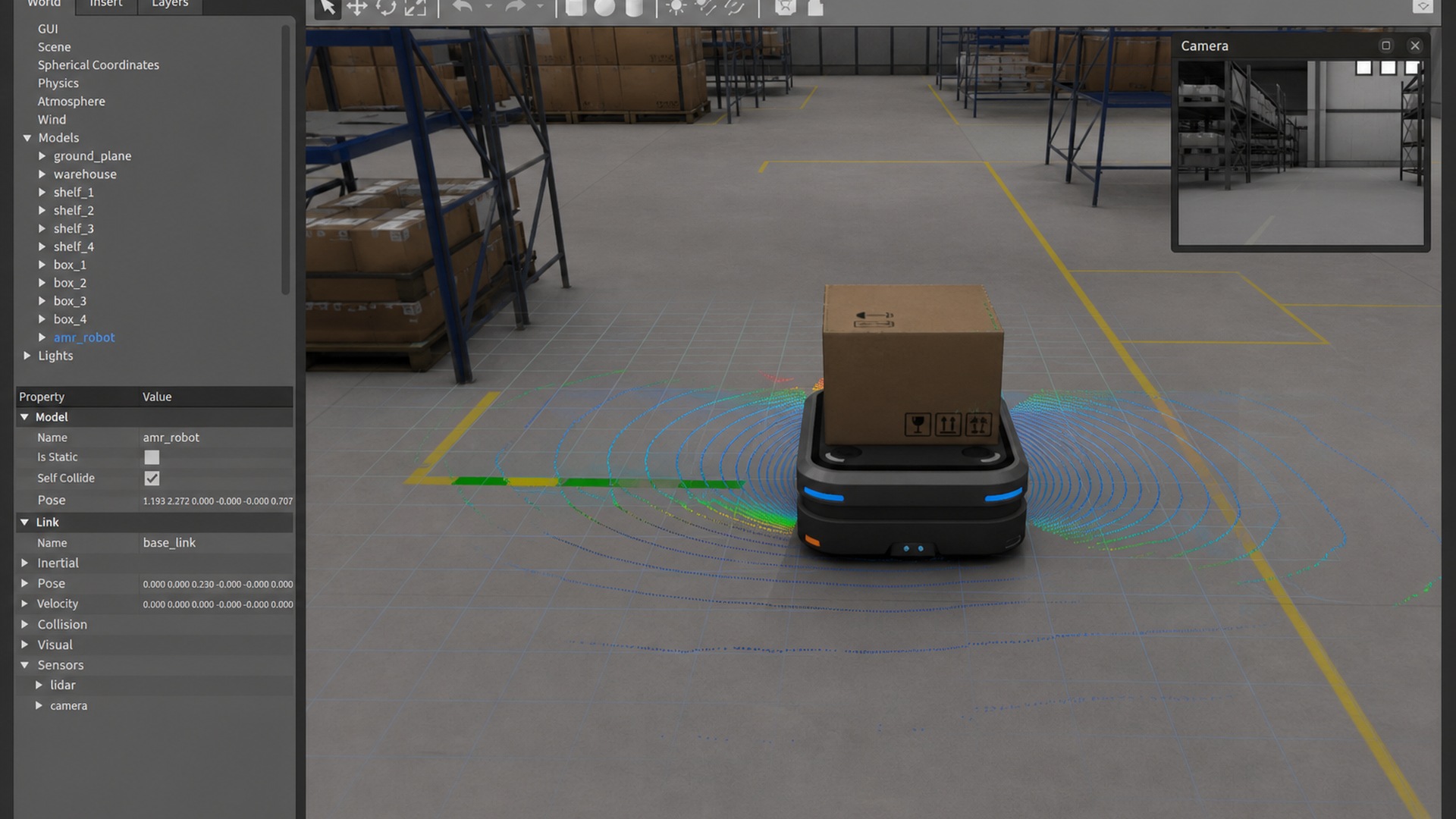
GazeboSimulationAMR
Simulation vs Real Robot — You Need Both
Most beginners stop at online tutorials and a perfect Gazebo world. That is a good start — but employers pay for the next step: debugging when reality is messy.
Real LiDAR picks up dust, sunlight, and unexpected obstacles. Wheels slip. Network drops. A stack that works in simulation may fail on tile, gravel, or a busy factory aisle. The engineer who can move from sim → TurtleBot → AMR → deployment is rare in India — and valuable.
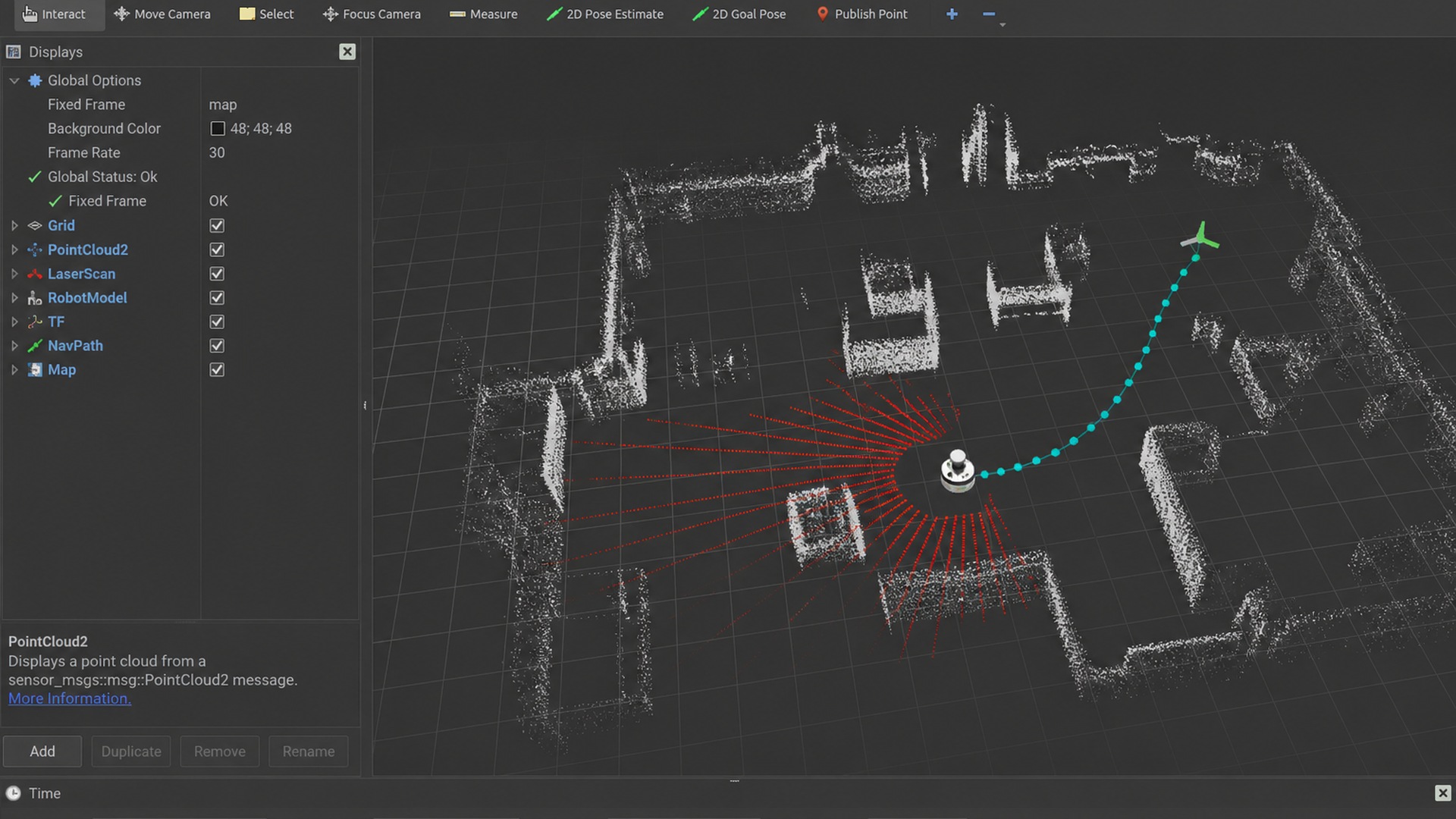
RVizNavigationDebugging
ROS2 and the AI Era (Embodied AI)
A few years ago, robotics and AI were separate tracks — mechanics here, models there. That line is gone. The interesting work now is embodied AI: connecting perception, language, and decision models to a physical platform that must move in real time.
Someone who only knows machine learning can train a model. Someone who only knows ROS2 can drive a robot. Someone who can connect an AI agent's decision to a ROS2 action server is building the engineer almost every serious robotics team is short on.
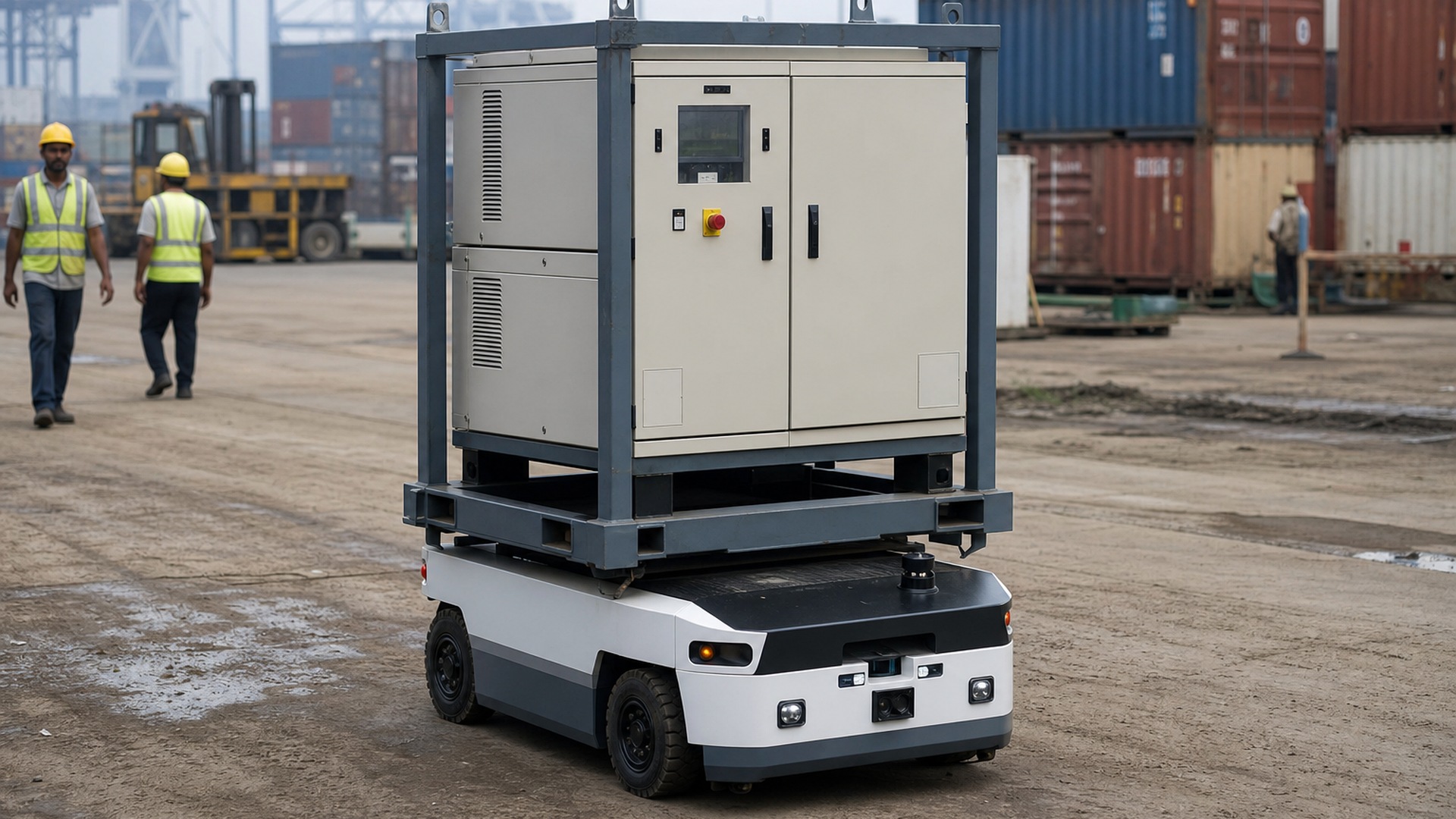
AMRPort opsField robotics
Why This Matters in India — Now
India is at an inflection point in indigenous robotics and defense-tech manufacturing. At Evolve Robot Lab we have seen this directly: building an autonomous inspection robot for the Indian Navy, integrating industrial robot arms on live manufacturing lines, and fielding AMRs for operational use. None of that works without engineers who understand ROS2 end to end — not just slides.
As more manufacturers, defense programs, and ports look to robotics for hazardous or repetitive work, the bottleneck is the same: not enough people who have built on real hardware.
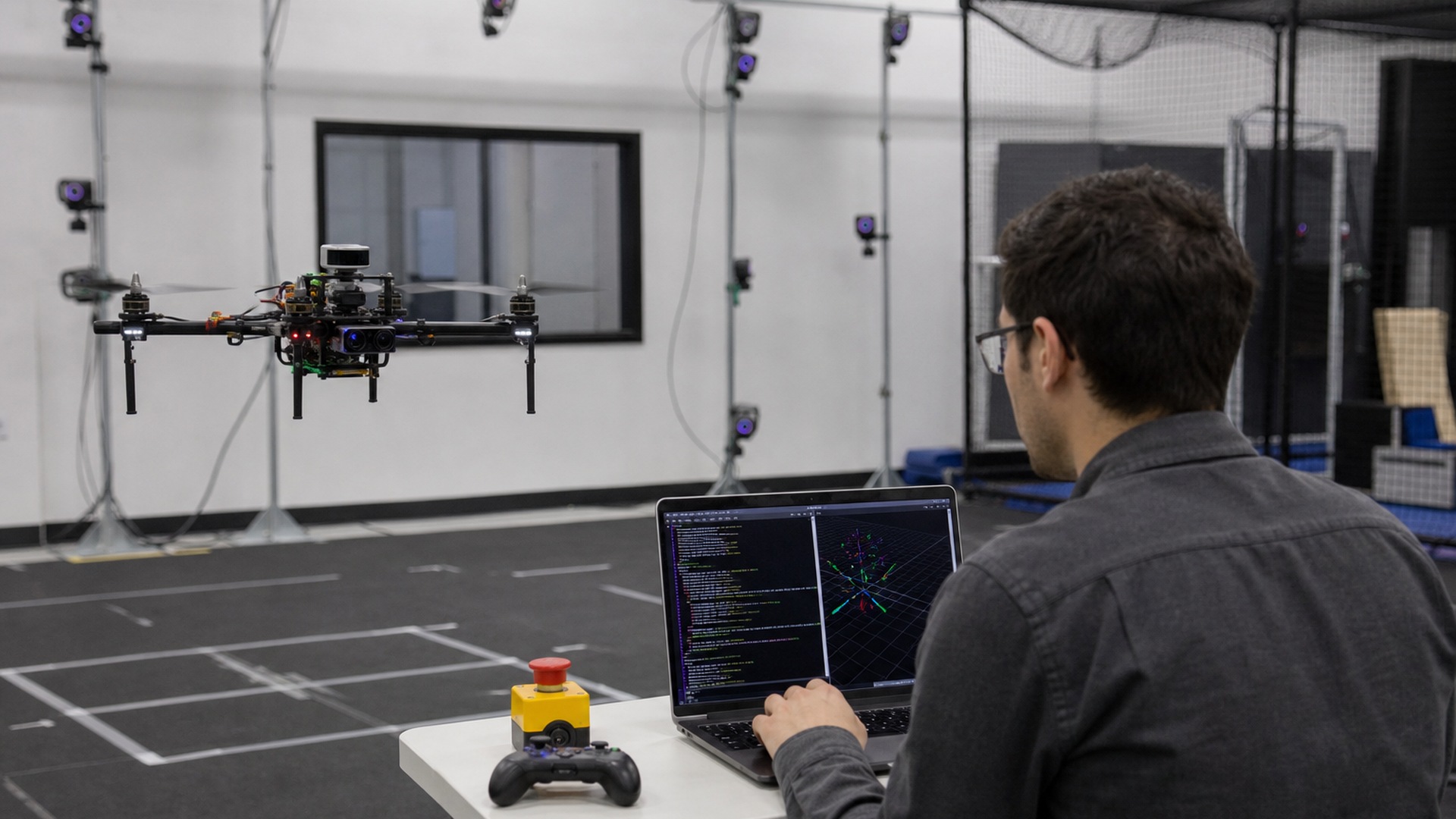
DroneROS2Lab training
What a Practical Learning Path Looks Like
The mistake is treating ROS2 like a programming language — syntax, copy-paste tutorials, done. The skill that gets you hired is systems thinking:
- How do you split code into nodes so perception, planning, and control do not break each other?
- How do you debug when the robot works in Gazebo but fails on the floor?
- How do you turn a demo into something a customer can run every day?
At Evolve Robot Lab we have trained 180+ engineers on ROS2. Our diploma and internship tracks use real platforms — AMRs, arms, quadrupeds — not simulation-only exercises. The goal is simple: when you finish, a founder or hiring manager trusts you to touch a live robot.
FAQ: Learning ROS2 and Building a Robotics Career
Is ROS2 hard to learn? If you know Python or C++, the basics (nodes, topics, services) are straightforward. What takes time is debugging on physical hardware — noisy sensors and strict timing. Theory alone will not teach that.
Do I need a robotics degree? No. Many ROS2 engineers come from CS, ECE, or mechanical backgrounds and learn by building. What matters is whether you have shipped or debugged something on a real platform.
What jobs use ROS2? AMRs, robotic arms, quadrupeds, drone stacks, warehouse automation, agritech, defense robotics, and embodied-AI startups.
How is this different from an online course? Online courses are a fine start, but most stop at simulation. Hiring managers look for hardware debugging, integration on live lines, and reliability outside a demo booth.
What does career growth look like? Robotics companies, defense-tech programs, industrial integrators, or your own venture. Genuine hands-on ROS2 talent still stands out fast in India.
Build Real Robots — Not Just Study Them
Explore Evolve Robot Lab's ROS2 diploma program and AI agents internship track — hands-on work on AMRs, arms, and field platforms in Chennai. Talk to us →